.svg)
KikoBooks gives SMB owners and accounting firms Agent Kiko — an approval-aware AI co-worker that reads live data, categorizes transactions, reconciles accounts, drafts journal entries, and queues the right next action without taking control away from you.
Import from QuickBooks, connect your finance stack, get daily briefings, and approve actions from your in-app Orb and chat workspace, plus email and voice.


Kiko routes each request to the right specialist across bookkeeping, bank feeds, GL, reporting, workflow, documents, and compliance. Ask a question, request an action, or let Kiko surface what changed overnight.

Kiko does not just wait for prompts. It scans overnight activity, surfaces what matters, and routes suggested actions through approval tiers that match the level of risk.
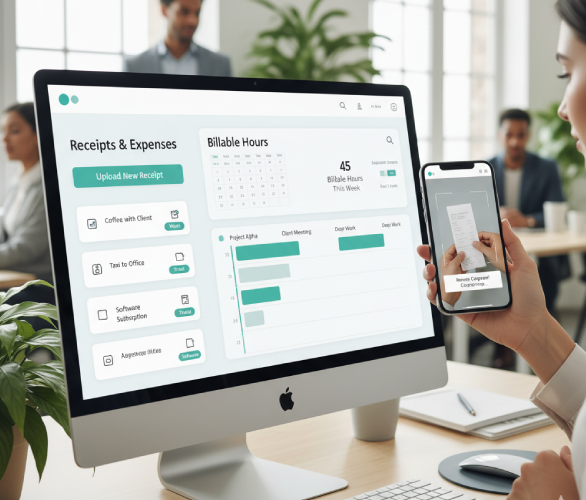
Ask Kiko what changed in your books and get live answers from your actual invoices, bills, bank data, customers, vendors, and GL balances.
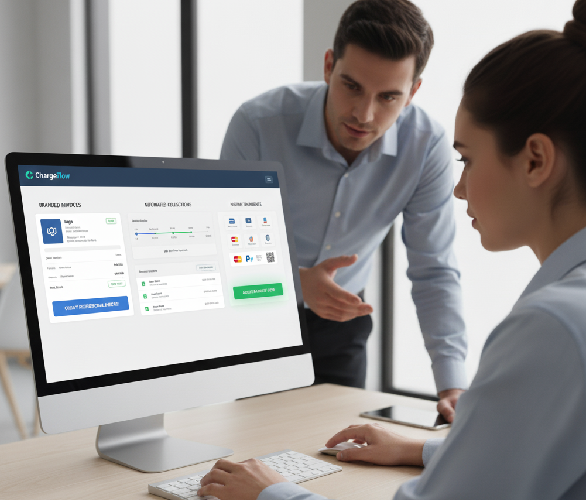
Create invoices, collect payments, follow up on receivables, and let Kiko draft the next AR action before cash flow becomes a problem.
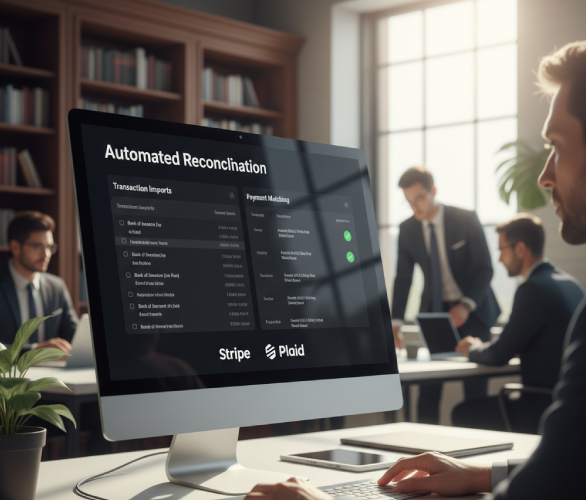
Pull transactions from connected providers, match them against invoices and bills, and let Kiko turn bank cleanup into an approval-aware workflow instead of a manual slog.

KikoBooks is built on real double-entry accounting, not a lightweight wrapper. Draft, review, and post journal entries with auditability built in.

KikoBooks is built for owner-operator teams and accounting firms that need staff, clients, and approvers working from the same system.

Getting live fast matters for operations. KikoBooks helps you connect the modern finance stack and migrate forward from legacy systems without re-keying everything.
Kiko isn’t a generic chatbot — it’s a team of 11 specialist agents, each trained for a specific job. Kiko routes accounting, banking, workflow, and reporting work to the right specialist so answers and actions stay grounded in your books.
Looks up transactions, answers accounting questions, and handles everyday record-keeping tasks for your business.
Classifies bank transactions to your Chart of Accounts using historical patterns and confidence scores.
Matches bank statements to ledger entries, flags duplicates, and suggests correcting entries.
Creates and validates double-entry journal entries with proper account codes and fiscal period rules.
Generates P&L, Balance Sheet, and Cash Flow reports. Calculates ratios and identifies trends.
Watches for 1099 thresholds, sales tax obligations, missing docs, and audit trail gaps.
Imports bank feeds, normalizes descriptions, matches to your accounts, and flags anomalies.
Quality-checks other agents' work — verifies entries balance, categorizations are accurate, and reconciliations match.
Classifies incoming documents and creates concise summaries of financial data, reports, and action items.
Reflects payroll runs in the books, drafts the related journal entries, and keeps wage and tax accounts tied out each pay period.
Drafts and sends invoices, applies incoming payments, and chases overdue receivables with owner-approved reminders.
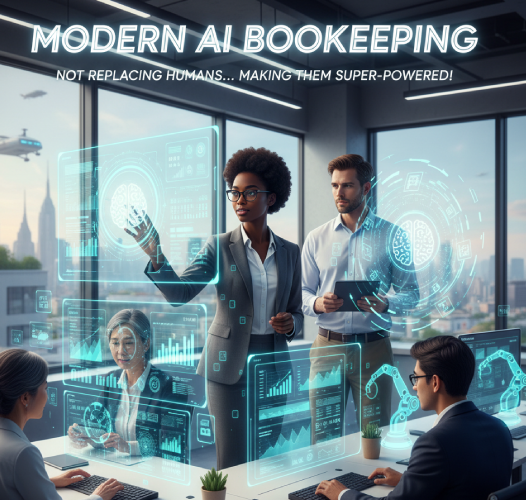
Kiko keeps context across your in-app workspace and communication channels:
Every AI action goes through a trust-and-verify system based on confidence levels:
No fixed packages, no locked-in plan math, and no static website price card to keep in sync. KikoBooks runs on a wallet-based pay-as-you-go model, and the live pricing always stays inside the app.
You pay for what you use:
Live rates, current usage, wallet balance, and pricing updates are always visible inside the app under Wallet & Pricing. Set budgets, auto-recharge rules, and guardrails so spend stays under your control.
Top up your wallet, set low-balance alerts, and decide how far automation can go. If the wallet hits your limit, non-essential work pauses until you approve more usage. Every charge is recorded in the wallet ledger inside the app.
KikoBooks is strongest when you need real bookkeeping infrastructure plus an approval-aware AI operating layer for owners, staff, and accounting firms.
Kiko can act on live business data, but every risky or ambiguous step stays reviewable through confidence scoring, approval cards, and audit history.
KikoBooks spans owner workflows, accountant workflows, client collaboration, and bookkeeping execution in one system instead of forcing handoffs across disconnected tools.
Connect Stripe, Bill.com, Gusto, Brex, Ramp, bank-feed workflows, and QuickBooks migration paths instead of building your bookkeeping process around manual imports.
Kiko starts in Orb and chat for owners and staff, then extends into email and voice while preserving the same context, approvals, and action history.
The platform is free to start, then AI work, document processing, communications, and storage are metered transparently through wallet controls and budget caps.
Move beyond workflow-heavy bookkeeping software without losing historical customers, vendors, chart of accounts, and transaction context.
Honest positioning sells better than hype. QuickBooks Online still wins on ecosystem breadth. Digits and Puzzle are sharper on AI-native bookkeeping and close. KikoBooks wins when you want an approval-aware AI co-worker plus bookkeeping, collaboration, and client-facing workflows in one operating system.
QuickBooks is broader and more established. KikoBooks is more opinionated around AI-driven approvals, chat-first workflows, and a co-worker model that acts on your books instead of just storing them.
Digits is strong on AI-native accounting, dashboards, mobile, and developer ecosystem. KikoBooks leans harder into approval controls, multi-channel communication, client workflows, and pay-as-you-go AI usage.
Puzzle is strong on real-time books, faster close, and startup/accounting-firm messaging. KikoBooks adds a broader co-worker layer with multi-channel execution, wallet controls, and workflow surfaces beyond the close.
SMB owners, operators, and accounting firms that want live bookkeeping infrastructure, AI assistance that can actually act, and a human checkpoint before important work lands in the ledger.

KikoBooks connects your bookkeeping workflows to the systems buyers already run:
Prefer Claude or ChatGPT? KikoBooks ships an open MCP server so your AI assistant can work your ledger directly — 116 governed tools covering bookkeeping, reports, banking, CRM, proposals and workflow. Read-only by default, scoped write when you want it, and your approval on every change.
Claude Desktop, ChatGPT, VS Code Copilot, or any MCP client — no new app to learn.
Bookkeeping, reports, banking & reconciliation, CRM, proposals and workflow over a secure API.
Read-only by default. Switch on scoped write, update and delete tiers — and revoke anytime.
Status-first connect, read-back verification, and your sign-off before anything posts. Secrets stay secret.
// claude_desktop_config.json or .vscode/mcp.json
{
  "kikobooks": {
    "command": "npx",
    "args": ["-y", "@agentkiko/kikobooks-mcp-server@latest"],
    "env": {
      "KIKOBOOKS_BASE_URL": "https://ai.kikobooks.com",
      "KIKOBOOKS_API_KEY": "your_api_key"
    }
  }
}
More on the KikoBooks roadmap.
Kiko categorizes expenses, reconciles payments, drafts journal entries, flags anomalies, and prepares the next action — 24/7. Your team approves what matters, clients can stay in the loop, and the audit trail captures the reasoning behind every move.